
Share this product :
Sodium Nitrate - Taiwan
- Origin
- : Taiwan
- CAS Number
- : 7631-99-4
- HS Code
- : 3102.50.00
Basic Info
- IUPAC Name
- : sodium nitrate
- Molecular Formula
- : NaNO3
- Molecular Weight (g/mol)
- : 84.9900
- Synonyms & Trade Names
- : Sodium nitrate; Chile saltpeter; Soda niter; E251
- Purity / Assay (%)
- : 99% min
- Grade / Quality Level
- : Technical Grade
- Physical Form
- : Solid
- Concentration
- : Pure substance
- Appearance / Color
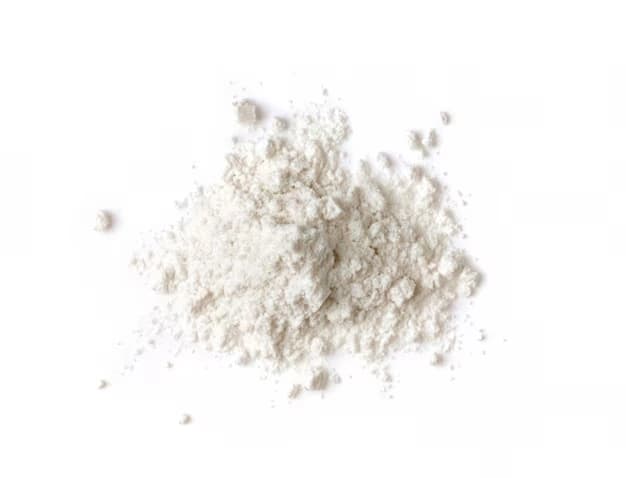
- : White to off-white solid
- Odor
- : Odorless
- Melting Point (°C)
- : 308.0000
- Boiling Point (°C)
- : 380 (decomposes)
- Density (g/cm³)
- : 2.2610
- Solubility in Water
- : Freely soluble
- Signal Word
- : Warning
- UN Number
- : 1498
- GHS Hazard Class
- : Oxidizer
- H-Statements
- : H272|H302|H332
- P-Statements
- : P210|P220|P221|P260|P264|P270
- REACH Status
- : Registered
- Drug Precursor Status
- : Non-precursor
- Storage Class (GHS)
- : 5.1
- Storage Conditions
- : Cool, dry; separated from combustibles; oxidizer
Categories
Share this product :
Brief Overview
Chile and Peru are natural sources of sodium nitrate. The formula for this whitish solid is NaNO3. It has a high water solubility and is a good source of nitrate anion, which is highly beneficial to several industries. Since sodium nitrate is a naturally occurring resource, it has been heavily mined to satisfy the enormous demand for it up to the 20th century.
Up to the 20th century, the primary source of sodium nitrate was the mineral caliche ore, which contains nitrate salts. Industrial nitrate synthesis was created by German chemists Fritz Haber and Carl Bosch.
Manufacturing Process
Method 1: Mining: It is possible to extract sodium nitrate and its nitrate salts from the caliche ore found in Peru and Chile. The only sources of nitrate salts for over a century were mines in Chile and Peru. For use in industry, mined nitrate salts undergo processing, purification, and standardization. But as the need for sodium nitrate rises, other ways must be found before the natural resources run out.
Method 2: Haber Process: On an industrial scale, hydrogen and nitrogen gas are combined with a CaO catalyst to produce sodium nitrate. The reaction is thermodynamically advantageous at low pressures of 200 atmospheric pressure because it is exothermic. This method is used to produce ammonia, which is then readily transformed into nitrate via nitrification.
Method 3: Neutralization: Another way to make sodium nitrate is to use soda ash to neutralize nitric acid. As an alternative, sodium nitrate can also be produced by combining ammonium nitrate with sodium hydroxide, sodium bicarbonate, or sodium carbonate.