
Share this product :
Sodium Nitrate - China
- Origin
- : China
- CAS Number
- : 7631-99-4
- HS Code
- : 3102.50.00
Basic Info
- IUPAC Name
- : sodium nitrate
- Molecular Formula
- : NaNO3
- Molecular Weight (g/mol)
- : 84.9900
- Synonyms & Trade Names
- : Sodium nitrate; Chile saltpeter; Soda niter; E251
- Purity / Assay (%)
- : 99% min
- Grade / Quality Level
- : Technical Grade
- Physical Form
- : Solid
- Concentration
- : Pure substance
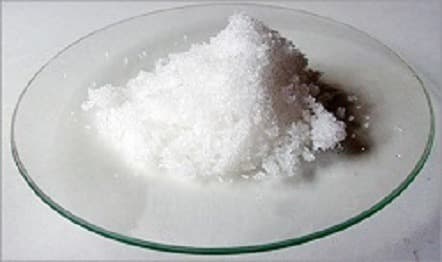
- Appearance / Color
- : White to off-white solid
- Odor
- : Odorless
- Melting Point (°C)
- : 308.0000
- Boiling Point (°C)
- : 380 (decomposes)
- Density (g/cm³)
- : 2.2610
- Solubility in Water
- : Freely soluble
- Signal Word
- : Warning
- UN Number
- : 1498
- GHS Hazard Class
- : Oxidizer
- H-Statements
- : H272|H302|H332
- P-Statements
- : P210|P220|P221|P260|P264|P270
- REACH Status
- : Registered
- Drug Precursor Status
- : Non-precursor
- Storage Class (GHS)
- : 5.1
- Storage Conditions
- : Cool, dry; separated from combustibles; oxidizer
Categories
Share this product :
Brief Overview
Sodium nitrate exist naturally in Chile and Peru. It is a white solid with the formula of NaNO3. It is very soluble in water and is also a good source of nitrate anion, which is greatly used by many industries. Being available as a natural resource, sodium nitrate is mined extensively to meet its huge demand till the 20th century.
Nitrate salts are bounded within the mineral caliche ore and serves as the main source of sodium nitrate till the 20th century. German chemist Fritz Haber and Carl Bosch developed a process to synthesize nitrate on an industrial scale.
Manufacturing Process
Method 1: Mining: Sodium nitrate and its nitrate salts can be mined from the caliche ore in Chile and Peru. For more than a century, supply of nitrate salts was purely mined from Chile and Peru. Mined nitrate salts are processed, purified and standardized for industrial consumption. However, with the increase in demand for sodium nitrate, alternative methods are required before natural supplies are depleted.
Method 2: Haber Process: Sodium nitrate is manufactured on an industrial scale using hydrogen and nitrogen gas, with the presence of CaO catalyst. As the reaction is exothermic, it is thermodynamically favorable under low-pressure conditions of 200-atmospheric pressure. Using this process, ammonia is manufactured and can be converted to nitrate easily through the process of nitrification.
Method 3: Neutralization: Sodium nitrate can also be manufactured by neutralizing nitric acid with soda ash. Alternatively, mixing ammonium nitrate with either sodium hydroxide, sodium bicarbonate or sodium carbonate can also yield sodium nitrate.