
Share this product :
Potassium Hydroxide (95%) - China
- Origin
- : China
- CAS Number
- : 1310-58-3
- HS Code
- : 2815.20.00
Basic Info
- IUPAC Name
- : potassium hydroxide
- Molecular Formula
- : KOH
- Molecular Weight (g/mol)
- : 56.1100
- Synonyms & Trade Names
- : Potassium hydroxide; Caustic potash; Potash lye; KOH
- Purity / Assay (%)
- : 95% min
- Grade / Quality Level
- : Industrial Grade
- Physical Form
- : Solid
- Concentration
- : Pure substance
- Appearance / Color
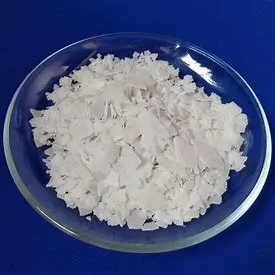
- : White to off-white solid
- Odor
- : Odorless
- Melting Point (°C)
- : 360.0000
- Boiling Point (°C)
- : 1327
- Density (g/cm³)
- : 2.1200
- Solubility in Water
- : Freely soluble (112g/100mL)
- Signal Word
- : Danger
- UN Number
- : 1813
- GHS Hazard Class
- : Skin corrosive; Eye corrosive
- H-Statements
- : H290|H314
- P-Statements
- : P234|P260|P264|P270|P273|P280|P301+P330+P331|P304+P340
- REACH Status
- : Registered
- Drug Precursor Status
- : Non-precursor
- Storage Class (GHS)
- : 8
- Storage Conditions
- : Cool, dry; sealed; away from acids and moisture
Categories
Share this product :
Brief Overview
Potassium Hydroxide is an odorless, white or slightly yellow color compound present either in crystal or liquid form and is composed of one potassium cation and one hydroxide anion. It is a chemical inorganic compound with formula KOH and is commonly known as Caustic Potash. It is a strong base along with sodium hydroxide, lithium hydroxide and few other metal hydroxides and it also resembles with sodium hydroxide in its chemical properties and applications. It is commercially sold as translucent pellets which sticky when exposed to air as it is hygroscopic in nature. KOH dissolves readily in water and this dissolution process is exothermic and it forms a strong alkaline caustic solution.
Manufacturing Process
Previously, it was created by adding potassium carbonate (potash) to a strong solution of calcium hydroxide (slaked lime), causing a metathesis reaction in which calcium carbonate precipitated, leaving potassium hydroxide in solution:
Ca(OH)2 + K2CO3 → CaCO3 + 2 KOH
Potassium hydroxide is obtained by filtering the precipitated calcium carbonate and boiling the solution. It was the primary method of producing potassium hydroxide until the late nineteenth century, when it was largely supplanted by the current method of electrolysis of potassium chloride solutions. The procedure is similar to that used to produce sodium hydroxide.
2 KCl + 2 H2O → 2 KOH + Cl2 + H2
On the cathode, hydrogen gas forms as a by-product, concurrently, anodic oxidation of the chloride ion occurs, producing chlorine gas as a by-product. This process requires the separation of the anodic and cathodic spaces in the electrolysis cell.